Thursday, 21 February 2019

Turkey Tops European Tourism Growth…Again


Turkey’s remarkable tourism turnaround continued into 2018 as it once again came out on top in Europe for international arrivals growth.

Preliminary results for last year show Turkey up 22.3 percent on the prior year, according to the European Travel Commission, which collated the data.

“Assuming year-to-date growth holds true for 2018 as a whole, arrivals to Turkey in 2018 will exceed 47 million – this would mark a new record for the destination in tourist arrivals terms, having never before exceeded 40 million,” the ETC said in its report.


What’s interesting is that even though Turkey is well on the path to recovery following the attempted coup in 2016 and several terrorist attacks, arrivals from key markets such as the United Kingdom and Germany are still lower than their peak levels. Last year’s growth also was also slightly down on 2017.

Tour operators like TUI Group and Thomas Cook have returned to Turkey in the last couple of years following a resurgence in customer demand. It is a much cheaper destination for both consumers and businesses, compared with those in the western Mediterranean.

Nick Wrightman, managing director of tour operator The Discerning Collection, which specializes in Turkey, said the country had enjoyed a buoyant couple of years.

“Turkey certainly has had a great 2018, it was getting much better in 2017,” he said.

Wrightman said the growth in 2018 can be attributed to the weak Turkish lira, cheaper hotels and the perception of an improvement in safety.

“I’ve noticed certainly that families are back again, and thats a great sign for Turkey. When families go, you know the destination is perceived as safe…”

Countries like Spain and Portugal were beneficiaries of instability in Turkey but the trend appears to be reversing now. Spain’s international tourism growth dropped to 0.7 percent and Portugal’s to 0.2 percent, both these figures only cover the first 11 months of the year.

After Turkey, the next highest growth levels came from Serbia (+14.7 percent,) Malta (+14.5 percent,) Montenegro (+14 percent,) and Latvia (+10.1 percent.)

The UK was the worst performing destination —down 5.3 percent — thanks in part to its impressive performance in 2017. This result only covers the first nine months of the year.

“More developed destinations can find it difficult to sustain higher rates of growth compared to developing ones,” the ETC said.

Iceland’s booming tourism industry looks like it is cooling, with growth falling back to 5.5 percent in 2018.

Europe travel is “disproportionately growing” for small group operator Intrepid Group, CEO James Thornton said Friday.

“Europe just in general is booming,” he said. “There have been less terror-related issues in the last 12 months. I think confidence has renewed in that sense.”

In addition to Turkey, which is also growing rapidly for Intrepid, Thornton said less-visited destinations are becoming magnets for travelers who want to “do something other people aren’t doing.”

“They can be the first and be there and get on social media and tell their friends about something, try to make something trendy,” he said.

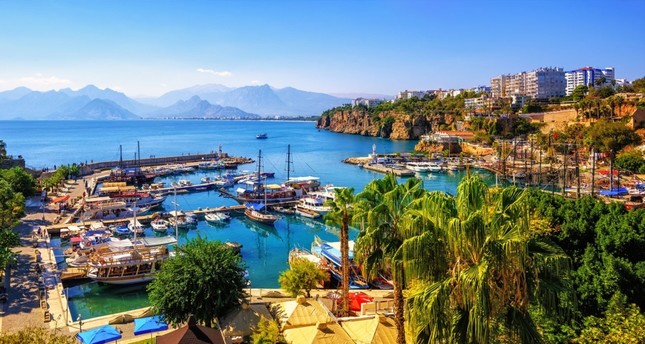
Turkey's tourism capital Antalya boasts 41 direct flights to 13 countries

Turkey's tourism capital Antalya boasts 41 direct flights to 13 countries


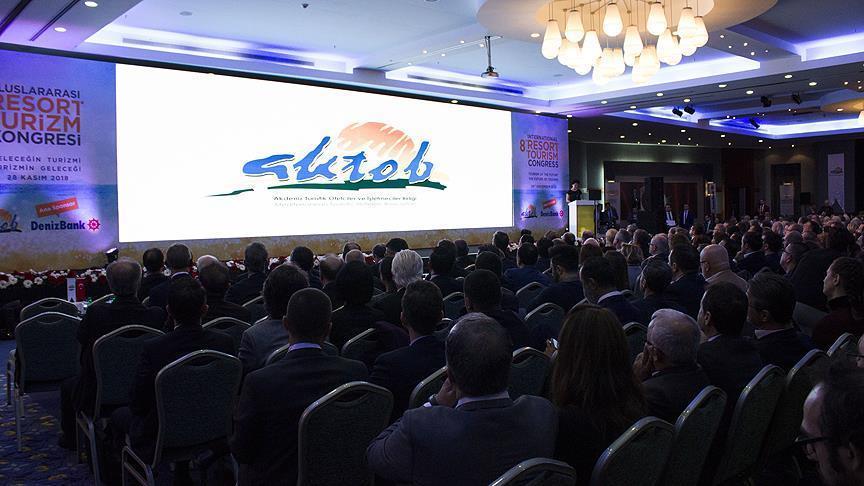
National flag carrier Turkish Airlines (THY) will schedule 41 direct flights to 13 countries from Turkey's holiday resort city of Antalya, with the intent of continuing flights in the winter season as well. The announcement came during the Mediterranean Touristic Operators Association's (AKTOB) February meeting, attended by Antalya Governor Münir Karaloğlu, THY Assistant General Manager in charge of Marketing and Sales Ahmet Olmuştur, AKTOB Chairman Erkan Yağcı and tourism professionals. In his address, THY's Olmuştur said Antalya is above world standards in terms of infrastructure and service quality, noting they added new destinations to existing direct flight points.

"As THY, we will schedule 41 flights per week to 13 international destinations. We are in talks to put an additional flight for a point in Azerbaijan, Lebanon and Saudi Arabia," he said. "In the past, Antalya had a structure that attracted tourists from Western Europe in general. We think that high-income tourists from the Gulf countries and the Middle East can come to Antalya as well."

He further explained that they will schedule three flights per week to Jordan's capital Amman as of June 3, adding they conduct marketing activities in 120 countries and plan to put two flights on the Berlin-Antalya line along with five weekly flights to Kuwait.


Stressing that London is one of the cities sending the largest number of visitors to Turkey, Olmuştur said they want to increase the number of flights on this line from two to five in this regard.

"We used to fly in the summer and cease our flights, except for Russia, in the winter. This time we will not do so but continue our flights with your support in the winter, not to all our points, but to Russia, Moscow, Germany, Berlin, Luxembourg, and Jeddah. Tel Aviv is a rising market," he noted. "Our charter flights are also important. Last year, we scheduled 4,135 charter flights from 33 international destinations, carrying 780,000 passengers. This year we will put a 16 percent capacity increase to this figure. We plan to bring around 900,000 passengers with charter flights." Founded in 1933, THY currently flies to over 300 destinations in more than 120 countries, holding the title of the airline that flies to the most countries in the world. The airline carried 75.2 million passengers last year, a 10 percent year-on-year increase. The company previously said the total number of passengers carried this year is set to reach 80 million.


On the other hand, Antalya Governor Karaloğlu said it is important for the sector to continue with a new perspective, pointing to the significance of THY's new vision for Antalya. "Turkish Airlines is making an important start this year. It is up to us to make this permanent," he said, underlining that they have great expectations for this year with hopes to reach new records.

AKTOB Chairman Yağcı recalled that the vision for the future was important, stressing that they want to raise the income generated from tourism, Yağcı added the number of tourists will increase with THY's direct flights. Turkey saw a double-digit increase in the number of foreign arrivals last year, welcoming 39.5 million foreign visitors, a 21.84 percent increase year-on-year, according to the Culture and Tourism Ministry data. On the other hand, the country's tourism income surged 12.3 percent to $29.5 billion, according to the Turkish Statistical Institute (TurkStat).

The total number of tourists that visited Turkey last year reached 46.1 million, out of which 6.6 million were Turkish citizens residing abroad. The figure corresponded to an 18.1 percent hike from the previous year.


Antalya was the second top destination, after Istanbul with 13.4 million tourists, and welcomed 12.4 million foreign visitors in 2018.

Monday, 18 February 2019

Turkish tourism sector eyes int'l congresses

Turkish tourism sector eyes int'l congresses


By Muhammed Ali Gurtas and Tuba Sahin
ANKARA
Turkey is holding high hopes for the future in the field of congress tourism, representatives of the sector said on Sunday.
Timur Bayindir, head of the Hotel Association of Turkey (TUROB) told Anadolu Agency in an exclusive interview that the country and its most popular touristic destination Istanbul will reenter the routes to international events this year.
"Congress tourism requires long-term planning, as the proposals for the organizations to be held in 2021 and 2022 have already been received," Timur Bayindir said.
"Turkey will return to its former world ranking position if we don't experience any negativity in the next 2-3 years," he said.
Pointing the development of congress tourism in Turkey in the last decade, Bayindir said: "In 2013, which was a record-year, Turkey hosted 221 international meetings to become the 18th country in the world."
He noted that the leading countries in this field are the U.S., Germany, and the U.K., while the prominent cities are Barcelona, Vienna, Paris, Berlin, and London.

Turkey has no security issue
"Turkey suffered from the cancellation of many approved organizations over the past three years following a fabricated negative security perception.
"As of 2016, the country lost its place in the top 10 and Istanbul couldn't hold its rank among the first 20 cities in the world," Bayindir said.
TUROB's head stressed that there is no security issue in Turkey, where the quality of service/accommodation is first-class.
"Increasing tourism revenue is more important than tourist numbers," he said. "We have not yet reached the desired price levels compared to European cities."
To promote congress tourism, Bayindir suggested that value-added tax exemptions on international events would be beneficial for attracting visitors with high-income level.
Last year, Turkey welcomed 39.5 million foreign visitors, as the country's tourism revenues reached $29.5 billion.

"Bleisure" gives Turkey advantages
Selcuk Boynuegri, vice chairman of the Association of Turkish Travel Agencies (TURSAB), told Anadolu Agency that Turkey will see a recovery in congress tourism sector which was negatively affected by political incidents.
"Leading international congresses will be held in Turkey this year and in the upcoming years," Boynuegri said.
He pointed out that congress tourism yields more revenue compared to individual and package tours.
"The world average congress delegate expenditure is around $2,200 per events.
"If Turkey's congress tourism income rises to the world average, it can give acceleration in the general tourism revenues," he said.
Boynuegri noted that more than half of international congresses and meetings are held in Europe.
Asserting the shining trend of "bleisure" -- the combination of business and leisure trips -- Boynuegri said this concept gives Turkey advantages to be preferred.
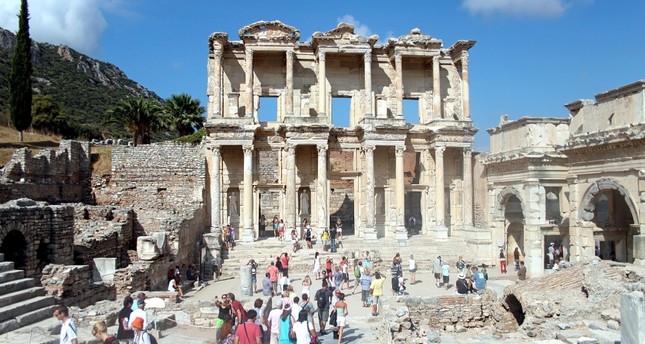
"Turkey's historical, cultural and natural beauties along with the technological infrastructure of hotels, congresses and event centers may make the country a key destination in this field," he added.

Turkey tops 33 European countries in tourism growth

Turkey reached the highest number of visitors in 2018, welcoming around 47 million tourists, the European Travel Commission said.


Turkey was the top performing tourist destination in 2018 and recorded the highest growth in the number of tourists among 33 European countries. According to the European Travel Commission's (ETC) "European Tourism in 2018: Trends & Prospects" report, the number of tourists visiting Turkey last year hit an all-time high and increased by 22 percent year-on-year. The report added that the number of tourists visiting the country exceeded 40 million for the first time and totaled 47 million in 2018.
The ETC highlighted that Turkey recovered quickly from the effects of the July 15, 2016, coup attempt. It added that the country saw a significant increase in the arrivals, particularly from Russia. Accordingly, the number of Russians visiting Turkey was 1.7 million higher than prior peak levels. Some 6.4 million Russian tourists visited Turkey in 2018.
The report also noted that hotels have been able to increase average room rates (ADR) in both Turkish lira and euro terms – in the month of December as well as in 2018 as a whole and that Turkey remains amongst the cheapest destinations within the accommodation dataset.
"The reversion to norms in terms of market share of Mediterranean destinations outlined in the last quarterly report appears to be continuing, with Turkey continuing to regain market share," it said.
The report added that Turkey saw growth in arrivals from Germany of 25.6 percent over January to November 2018 compared to the same period in 2017. Turkey is expecting record German arrivals in 2019.
On the other hand, British tourists have also flocked back to Turkey with the Turkish lira declining in value more than sterling. Arrivals were up 36.5 percent in the period January to November compared to the same months in 2017, the report noted.
"Growth of U.S. arrivals in Turkey was also very strong at 32.0 percent based on data to November," it said. Among others, Turkey continued to benefit from China's announcement of 2018 as "Turkey Tourism Year," with arrivals up by 67.1 percent on a year earlier. "As with most non-European source markets, there was strong growth of 74.4 percent in the number of Indian tourists visiting in Turkey. Turkey has been targeting the Indian wedding tourism market in particular," the report noted.
The ETC said that despite Europe's economic growth prospects faltering in recent months travel growth too, from, and within the region was robust in 2018, according to the latest available data. Thirty-two of 33 reporting destinations welcomed more arrivals and/or overnights compared to a year ago. Only the U.K. reported declines.
It highlighted that European tourism demand remained on solid footing with a 6 percent upswing in international tourist arrivals in 2018 over the year prior. "The most visited region in the world was able to sustain growth despite downside risks stemming from trade tensions, uncertainty surrounding Brexit and the economic slowdown in the Euro Area and China, all keeping 2019 growth prospects in question," it said. Virtually all reporting destinations (32 out of 33) registered some form of expansion, ETC said.
Following Turkey, Serbia and Malta were the countries registering the highest increase in the number of tourists in 2018, both with 15 percent. They were followed by Montenegro with 14 percent and Latvia, which was the only Central/Eastern European destination that enjoyed double-digit expansion, at 10 percent. "The U.K. [-5.3 percent] was the only market in negative territory," the report noted.
Among others, travel demand from the U.S. remained on firm footing. Growth from this market was fueled by a strengthened U.S. dollar against the euro and sterling, both increasing Europe's affordability as a tourism destination.
"In 2018 European destinations welcomed around 33 million international tourist arrivals from this market, up 8 percent from the previous year. The U.S. outbound travel, however, is expected to slow down owing to its decelerating economic momentum and consumer spending," the report read.
ETC said expansion continues in the eurozone, however, adverse risks such as tensions in financial markets, uncertainty surrounding the U.K.'s divorce plans from the EU and worrisome forward-looking indicators bear on growth prospects for 2019.
"Notwithstanding, the European tourism industry has yet again proved resilient in 2018 and accounts for over half [51 percent] of worldwide tourist arrivals. Looking ahead, growth in international tourist arrivals to the region is expected to hover around 3 percent in 2019," it added.

Sunday, 17 February 2019

SA tourism roadshow to target Turkish travel trade


JOHANNESBURG – South Africa's national tourism agency is set to conduct a roadshow for the first time in Istanbul, Turkey, to create platforms for access to that market, it said on Thursday.

The January 30 roadshow will provide 11 operators, including small, medium and micro-enterprises, an opportunity to engage with approximately 50 specially selected Middle East and Turkish travel trade companies, South African Tourism said in a statement.

It will the 23rd East Mediterranean International Tourism & Travel exhibition in Instabul, at which SA Tourism and trade partner will participate.

"Turkey is a strategically important market to SA Tourism as it is a springboard to the rest of the Middle East, India, and South East Asia region," SA Tourism said.

Factors that make South Africa an attractive destination for Turkish visitors include the fact that there are no visa requirements for travellers from both ends, and for Turkish tourists there is favourable airlift, said Sthembiso Dlamini, SA Tourism’s chief operating officer.

"This means there are direct flights from Turkey to South Africa with Turkish Airlines coupled with a sufficient number of frequencies offered by other airlines," Dlamini said.
"This has led to 12 139 Turkish tourist arrivals between January and October 2018, a 2.4 percent increase from the previous year."

Studies show that Turkish families visit South Africa for the culture, scenic beauty, beaches and safaris, while young tourists tend to be drawn by action and adventure tours.
Halaal tourism is also a factor. Since most Turkish travellers are Muslim, South Africa is well positioned to cater to their needs through a wide array of halaal restaurants and eateries across all nine provinces.

South Africa was ranked among the top 10 most Muslim-friendly travel destinations for 2018 by the Organisation of Islamic Cooperation in the annual MasterCard-Crescent Rating Global Muslim Travel Index.


Saturday, 16 February 2019

Turkey's tourism income totals $29.5B in 2018

Turkey's tourism income totals $29.5B in 2018


By Muhammed Ali Gurtas
ANKARA 
Turkey's tourism income totaled $29.5 billion in 2018, the country's statistical authority announced on Thursday. 
The annual tourism revenue surged 12.3 percent last year, up from $26.3 billion in the previous year, TurkStat reported.
"While 81.8 percent of this income [excluding GSM roaming and marina service expenditures] was obtained from foreign visitors, 18.2 percent was obtained from citizens resident abroad," TurkStat said.
"In this year, while individual expenditures constituted $22.5 billion of the total tourism income, $6.9 billion of tourism income was obtained by package tour expenditures," it said.
Turkey welcomed 45.6 million visitors in 2018, marking a 18.1 percent hike from the previous year -- 85.4 percent foreign and 14.6 percent representing Turkish citizens residing abroad.
According to the official data, average expenditure per capita was $647 in 2018, as foreigners spent $617 per capita and Turkish citizens spent $801 per capita.
TurkStat said visitors spent most for food and beverage in 2018 -- foreigners with around $4.38 billion and Turkish visitors with $1.55 billion.
Foreigners spent some $2.7 billion on clothes and shoes, and $966 million on souvenirs in addition to nearly $77 million on carpets and rugs. 
The primary visiting purpose of foreigners was "travel, entertainment, sports and cultural activities" with 60.5 percent, as their top accommodation choice was hotel/motel/pension with over 36 million overnights.
The primary travel reason of Turkish visitors residing abroad was “visiting relatives and friends” with 50.4 percent, while they mostly preferred private houses during their trips in Turkey with more than 17 million overnights.
Official figures also showed that the country's tourism expenditure -- which is the expenditure of the Turkish citizens resident in Turkey and visited abroad -- fell to some $4.9 billion last year, declining by 4.7 percent on a yearly basis.  
"In 2018, number of Turkish citizens visited abroad decreased by 5.7 percent compared to previous year and reached 8.38 million.
"Average expenditure was $584 per capita," the institute said.

Thursday, 14 February 2019

U.S. ally Turkey looks to Russia and Iran to protect its interests

Image: Iranian President Hassan Rouhani, shakes hands with Turkish President Recep Tayyip Erdogan and Russian President Vladimir Putin during a meeting in Sochi, Russia, on Feb. 14, 2019.


WASHINGTON — As Trump administration officials presided over the second day of an international conference in Warsaw dominated by calls to ratchet up pressure on Iran, one longtime U.S. ally and NATO member was noticeably absent — Turkey.
Snubbing the gathering in Poland, Turkish President Recep Tayyip Erdogan on Thursday attended a rival conference in the Black Sea resort of Sochi, where he planned to meet his Russian and Iranian counterparts to work out a final settlement of the war in Syria.
The dueling summits illustrate President Donald Trump's struggle to forge a united front against Iran, and reflect Turkey's drift away from Washington as it finds common ground with Moscow and Tehran, experts and former officials said.
For decades, the U.S. could count on Turkey as a reliable partner that would line up with other allies against Iran and support Washington's strategic goals. But the political landscape has changed, U.S. influence in the region is in doubt, and Ankara is staking out an independent course, said Colin Clarke, senior research fellow at the Soufan Center, a New York-based think tank.
"I think we're seeing a realignment," Clarke told NBC News. "The U.S. has gone from the position where we called the shots, to where we are making mere suggestions to Turkey. That's a major sea change."
Turkey's relations with Washington have come under mounting strain since Erdogan was elected president in 2014, as the Turkish leader has pushed back on U.S. policies and carried out a crackdown on dissent. But the conflict in Syria has opened up the most dramatic divide between the two countries, with Ankara infuriated at Washington's support for Kurdish forces in Syria, which it sees as a terrorist threat.
When national security adviser John Bolton flew to Ankara in January, Erdogan refused to meet him and expressed outrage at U.S. demands that Turkey refrain from launching strikes against Kurdish fighters in northeastern Syria.
Image: Civilians wait at a makeshift checkpoint after fleeing ISIS from the Syrian city of Bagouz on Feb. 9, 2019.
Civilians wait at a makeshift checkpoint after fleeing ISIS from the Syrian city of Bagouz on Feb. 9, 2019.Chris McGrath / Getty Images
"We cannot swallow . . . the message that Bolton gave in Israel," the Turkish president said, and added that Bolton "probably doesn't know" the difference between ethnic Kurds and armed Kurdish groups.
With the U.S. planning to withdraw its small contingent of 2,000 troops in Syria within months, Turkey has recognized for some time it must reach an accommodation with Russia and Iran to safeguard its interests in Syria, experts said.
"The real power brokers in Syria are Iran and Russia," said Ilan Goldenberg, a former senior official under the Obama administration and now a senior fellow at the Center for a New American Security, a think tank.
The three countries meeting in Sochi have emerged as the dominant players in what appears to be the final phase of the Syrian civil war. Russia and Iran came to the aid of the Syrian regime of Bashar al-Assad and have succeeded in turning the tide of the conflict in Assad's favor.
Image: A Syrian Democratic forces fighter stands guard on a rooftop after retaking the city of Raqa from ISIS fighters on Oct. 20, 2017.
A Syrian Democratic Forces fighter stands guard on a rooftop after retaking the city of Raqqa from ISIS fighters on Oct. 20, 2017.Bulent Kilic / AFP/Getty Images file
Turkey cultivated Islamist rebel groups opposed to Assad that have been beaten back for the most part. But Russia and Iran need Turkey's help in squelching the rebels in their last strongholds in the northern province of Idlib, and Ankara needs Russian and Iranian cooperation to ensure Kurdish forces are kept in check and to pave the way for Syrian refugees to return, former U.S. diplomats said.
"I am confident that our trilateral summit on Syria will provide a new impulse toward stabilization in this country," Putin said before the talks began in Sochi.
In discussions with Ankara, U.S. officials have revived the idea of a protected "buffer zone" for the Kurds in the northeast, but Erdogan has said any such area would have to be coordinated with Russia.
When an uprising erupted in Syria in 2011, Erdogan had hoped to see Assad fall. But Turkey has since come to accept that Assad is firmly in place, and that the Syrian regime's patrons — Russia and Iran — will be needed to prevent a Kurdish state forming on Turkey's southern border, said Aykan Erdemir, a member of the Turkish parliament from 2011-2015.
Image: Recep Tayyip Erdogan
Turkey's President Recep Tayyip Erdogan speaks to the media at the parliament in Ankara on Jan. 8, 2019.Burhan Ozbilici / AP
"Turkey realizes it has lost in Syria. And the Kurdish issue has always been the top priority for Turkey," said Erdemir, now a fellow at the Foundation for Defense of Democracies, a hawkish think tank. And that "means you have to work with Russia," he said.
As U.N. peace talks on Syria foundered in recent years despite backing from the United States, Turkey joined up with Russia and Iran for an alternative peace process that soon overshadowed the U.N. effort, a result that made the United States look impotent, foreign diplomats and experts said.

Turkey's election body limits recount in Istanbul

AK Party’s representative on Turkey's election board​ said that the party's appeal to cancel the election results in an Istanbul d...